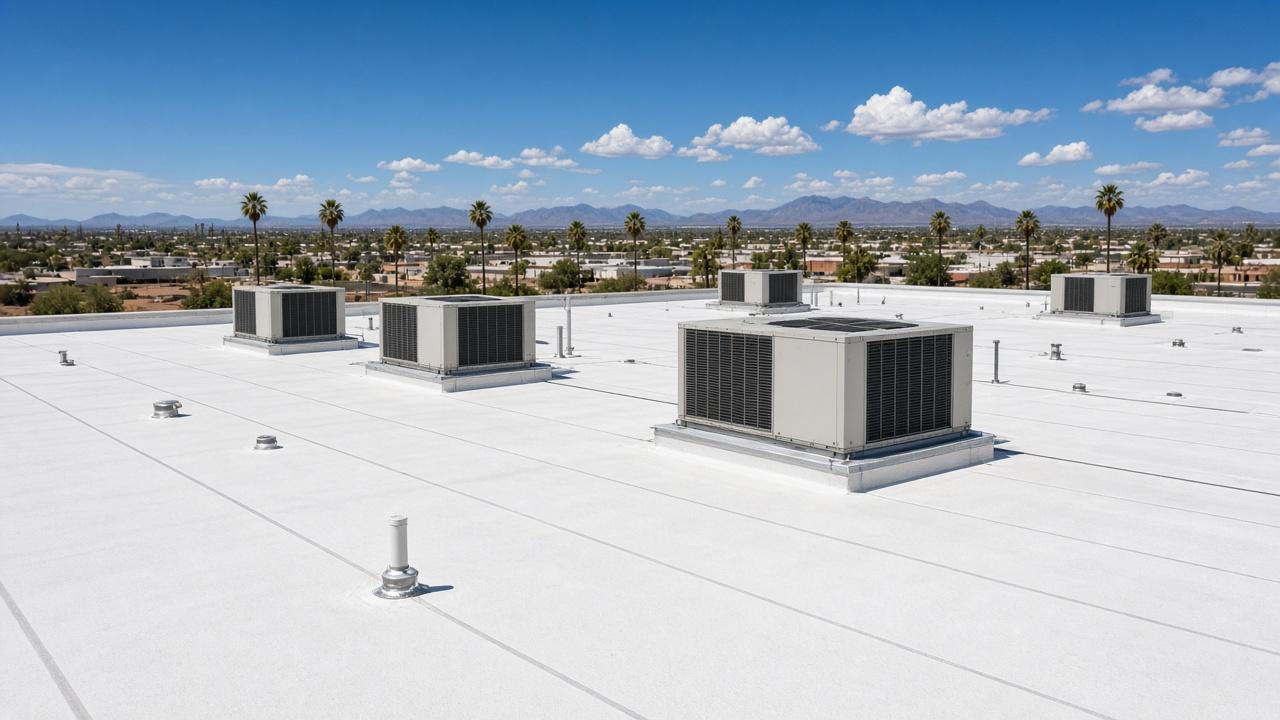
Commercial Flat Roofing in Mesa, AZ — TPO, EPDM, BUR & Coating Systems
The complete guide to commercial flat roofing systems in Mesa and the East Valley. We install and maintain every major flat roof membrane — TPO, EPDM, built-up, modified bitumen, and coatings.
Mesa Commercial Roofing Co. Commercial flat roofing is the dominant roofing category across the Mesa and East Valley commercial market. Strip malls, warehouses, restaurants, office buildings, healthcare facilities, schools — most of them have flat or low-slope roofs, and most of those roofs need professional attention at some point in their lifecycle.
The term 'flat roofing' actually covers half a dozen distinct systems: TPO, EPDM, built-up roofing (BUR), modified bitumen, silicone coatings, and acrylic coatings. Each has different performance characteristics, installation methods, cost profiles, and maintenance requirements. Understanding which system belongs on which building is the entire job — and it's where most commercial roofing mistakes get made.
Commercial Flat Roofing Systems Compared
Choosing a flat roofing system isn't about picking the cheapest option or defaulting to whatever the last contractor installed. It's about matching the system to the building's use, drainage, occupancy, and long-term ownership plan.
TPO (Thermoplastic Polyolefin). The most commonly installed commercial flat roofing system in Arizona. Heat-welded seams, excellent solar reflectance, and strong UV resistance make it a natural fit for Mesa's climate. A properly installed 60-mil or 80-mil TPO system on a well-maintained deck will last 20–30 years. It's the right choice for most new commercial flat roof installations in the East Valley.
EPDM (Ethylene Propylene Diene Monomer). Synthetic rubber membrane installed in large sheets with either adhesive or mechanically fastened attachment. EPDM excels at thermal flexibility — it handles the expansion and contraction cycles that can split stiffer membranes. Common on office buildings, schools, and multi-tenant properties where longevity is the priority.
Built-Up Roofing (BUR). Multi-ply bituminous systems with alternating layers of roofing felt and hot-mopped asphalt, topped with gravel or a cap sheet. The most redundant system available — a leak through one ply gets stopped by the next. Proven over 100+ years and still the right choice for high-traffic roofs and buildings that prioritize physical durability over installation speed.
Modified Bitumen. A more modern evolution of BUR using polymer-modified asphalt applied in sheet form. Torch-applied, hot-mopped, or cold-adhesive installation. The cap sheet gives a clean, inspectable surface. Modified bitumen is standard on retail strips and hospitality properties across Mesa.
Silicone Roof Coatings. Spray-applied over existing membrane systems to restore weatherability, add solar reflectance, and stop leaks. The right choice when the existing membrane is structurally sound but aging. A silicone coating can extend a roof's life 10–20 years at roughly half the cost of replacement. Self-healing in Arizona's heat — minor surface cracks close back up.
Acrylic Roof Coatings. Water-based elastomeric coatings applied over metal, modified bitumen, or BUR. Lower cost than silicone, less ponding-water resistance. Best for roofs with good drainage and moderate wear.
How to Choose the Right Commercial Flat Roofing System
The right system depends on several factors that only a proper site assessment can determine:
Drainage quality. Roofs that pond water need systems tolerant of standing water — EPDM and silicone coatings handle this better than acrylic or standard TPO seams without proper detailing. If drainage can be improved, more options open up.
Existing substrate condition. Wet or compressed insulation must be replaced before any new membrane goes on. Installing a new TPO over wet polyiso voids the manufacturer warranty and guarantees early failure. Moisture scanning is non-negotiable before a recover or overlay.
Building use and foot traffic. Rooftop HVAC maintenance, restaurant kitchen exhaust work, and solar panel servicing all add foot traffic that punctures thin membranes. High-traffic areas need thicker membranes (80-mil TPO) or membrane protection boards over existing systems.
Project budget vs. ownership horizon. A coating restoration at 40% of replacement cost makes sense for an owner who plans to sell in 5 years. A new 80-mil TPO with a 20-year manufacturer warranty makes sense for a long-term holder. We give you the data to make that decision.
Code and permit requirements. Maricopa County and the City of Mesa have specific requirements for re-roofing vs. recover vs. full replacement, depending on the existing system's layer count and the building's permit history. We handle the permit process as part of every project.
Commercial Flat Roofing Maintenance in Arizona
Arizona's climate is uniquely hard on flat roofs. Summer surface temperatures regularly exceed 160°F. Monsoon season delivers intense UV radiation followed by heavy rain and hail in a matter of hours. The expansion-contraction cycles over a year are extreme.
The roofs that fail early almost always share one characteristic: they were never maintained. Drains clog, seams lift slightly, flashing gaps open at penetrations, and small problems become big ones. A twice-yearly inspection and minor repair program — typically 0.5–1% of the roof's replacement cost annually — prevents the emergency repairs that cost 5–10x more.
Our commercial flat roofing maintenance program includes:
- Semi-annual inspection with drone imagery and written report
- Drain clearing and downspout inspection
- Seam probing and flashing inspection at all penetrations
- Minor repairs included in the annual program fee
- Photo documentation of all conditions found
- Manufacturer warranty compliance documentation
Commercial Flat Roofing Costs in Mesa, AZ
Flat roofing costs in the Mesa market vary significantly by system and condition:
| System | Installed Cost Range (per sq ft) | Typical Lifespan |
| TPO 60-mil | $7–$11 | 20–30 years |
| TPO 80-mil | $9–$14 | 25–35 years |
| EPDM | $7–$12 | 20–30 years |
| Modified Bitumen | $5–$9 | 15–25 years |
| BUR (3-ply) | $8–$14 | 20–30 years |
| Silicone Coating | $3–$5 | 10–20 years additional |
| Acrylic Coating | $2–$4 | 7–12 years additional |
These ranges reflect the East Valley commercial market in current conditions. Actual pricing depends on roof access, penetration count, existing condition, and project size. Projects over 50,000 sq ft typically see lower per-square-foot costs due to economy of scale.
Common Questions
What is the best commercial flat roofing system for Arizona's heat?
How long does a commercial flat roof last in Mesa, AZ?
Can I put a new flat roof over my existing one?
What's the difference between a flat roof and a low-slope roof?
How do I know if my commercial flat roof needs replacement vs. repair vs. coating?
Related Solutions
TPO Roofing
Thermoplastic polyolefin roofing systems built for Arizona's brutal sun. We install, repair, and maintain TPO membranes across Mesa's commercial sector.
EPDM Roofing
Durable synthetic rubber membranes that handle thermal cycling and UV exposure. Ideal for office buildings, schools, and multi-tenant commercial properties.
Roof Coating & Restoration
Silicone and acrylic roof coatings restore aging membranes, stop leaks, and slash cooling costs. Often half the price of a full replacement.
Built-Up Roofing (BUR)
Multi-ply bituminous systems for flat commercial roofs demanding maximum redundancy. Favored for retail, hospitality, and municipal buildings in the Mesa market.
Serving Mesa, Phoenix, Scottsdale, Chandler, Gilbert, Tempe, Glendale, Peoria, Queen Creek, and Apache Junction. Mesa Commercial Roofing Co. handles commercial roofing across the entire East Valley.