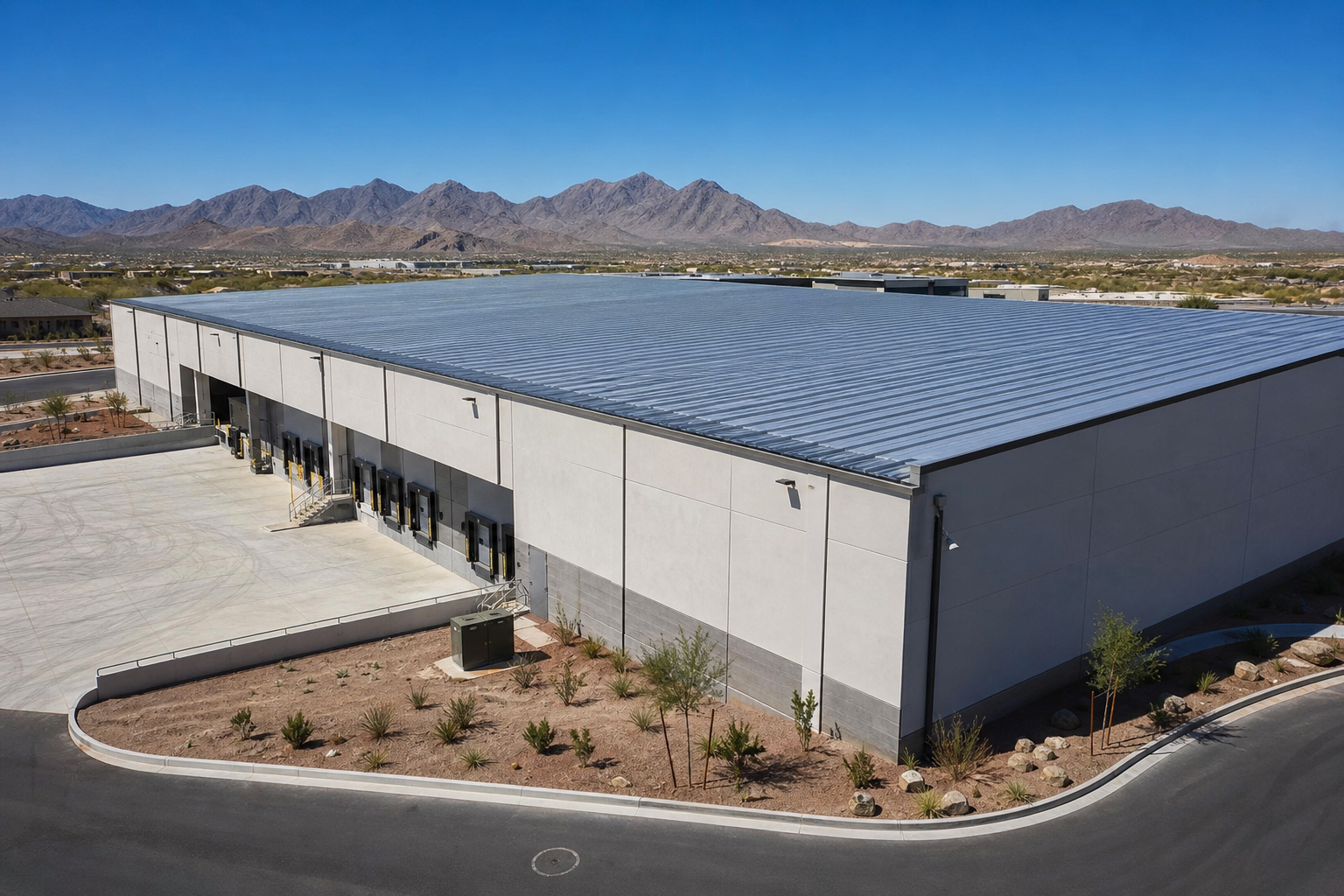
Commercial Metal Roofing in Mesa, AZ — Standing Seam & R-Panel Systems
Commercial metal roofing systems engineered for warehouses, retail strips, and industrial facilities throughout the East Valley.
Mesa Commercial Roofing Co. Commercial metal roofing is among the most durable systems available for Arizona buildings. Standing seam steel and aluminum roofs routinely outlast the original building ownership, handle the monsoon loads that flatten cheaper systems, and provide a rigid, inspectable surface that facility managers can actually walk without worrying about punctures.
The challenge with commercial metal is execution. Metal expands and contracts significantly with temperature changes — especially in a desert climate where a roof surface can swing from 40°F at 4 a.m. to 165°F on a July afternoon. Every penetration, every seam, and every transition detail must account for that movement. Contractors who come from residential metal work often miss this on commercial scale.
Commercial Metal Roofing Systems We Install
Standing Seam Metal Roofing. The industry benchmark for long-term commercial metal performance. Hidden fasteners eliminate exposed fastener corrosion and blow-off risk. The raised, interlocking seams handle expansion and contraction through floating clips that allow movement without stressing the panel. We install Galvalume steel and aluminum standing seam systems from 22 gauge to 26 gauge depending on span and load requirements.
R-Panel and PBR Panel. Exposed-fastener metal panel systems are the workhorses of Arizona warehousing and industrial construction. They install faster, cost less, and are easy to repair and extend. The trade-off is that exposed fasteners require attention over time — gaskets harden in the desert heat and can begin allowing water intrusion at Year 10–15. Annual inspection is important for exposed-fastener systems.
Metal Retrofit Over Existing Roofs. One of the most cost-effective options for aging low-slope roofs is a metal retrofit system — a sub-framing system that raises a new standing seam or structural panel above the existing roof assembly. This eliminates tear-off cost, provides a permanent drainage slope, and creates an air gap that improves thermal performance. We design and install metal retrofit systems for flat-to-metal conversions.
Architectural Metal Panels. For Scottsdale-adjacent commercial, medical, or hospitality projects where aesthetics matter, architectural metal panel systems provide a premium look with all the durability benefits of commercial metal. Multiple profiles, Kynar finishes, and custom colors available.
Thermal Movement: The Critical Variable
Galvalume steel expands at roughly 0.0000065 inches per inch per degree Fahrenheit. A 100-foot panel exposed to a 125°F temperature swing — totally normal in Mesa — will expand about 1 inch in total. That movement needs somewhere to go. Standing seam's floating clips handle it elegantly. Exposed-fastener systems rely on oversized holes in the panel and proper torque specification at installation.
Get this wrong and you get oil-canning (visible panel distortion), fastener backout, and eventually fatigue cracking at fixed points. We calculate thermal movement for every commercial metal project before specifying the system.
Insulation and Vapor Control Under Metal
Metal itself provides no thermal resistance. The insulation below the metal does all the work. Options include:
- Fiberglass blanket insulation in the panel cavities (most common for R-panel warehouses)
- Rigid polyiso insulation board under standing seam on a substrate (higher R-value, better performance)
- Spray polyurethane foam at all seams and penetrations to eliminate thermal bridging
In Arizona's climate, the primary goal is solar heat gain control. Radiant barriers, high-emissivity roof coatings on steel panels, and proper ventilation in the attic cavity between the metal and the conditioned space all contribute meaningfully to energy performance.
Metal Roofing for Specific Commercial Building Types
Warehouses and distribution centers. Large-span R-panel or structural standing seam with integrated skylights and HVAC curbs. We work closely with metal building manufacturers on new construction and handle re-roofing of existing metal-framed buildings.
Retail and strip centers. Low-slope or moderate-slope standing seam with parapet walls. Aesthetics matter in retail — we use quality Kynar 500 coatings that hold color for 30+ years.
Industrial and manufacturing. Heavy-gauge panels, crane clearance considerations, specialty penetrations for process exhaust, and coordinated installation scheduling around production operations.
Restaurants and food service. Metal above the kitchen zone requires specific detailing around exhaust equipment. We work with the HVAC contractor to ensure curbs are properly flashed and the metal system won't be compromised by grease exhaust contact.
Metal Roof Maintenance
Standing seam systems require minimal maintenance compared to membrane systems. Key annual tasks: inspect and lubricate clips on longer spans, check all pipe boots and penetrations for sealant integrity, clear debris from valleys and gutters, and check for any fastener backout on exposed-fastener systems. We document everything so you have a maintenance history.
Common Questions
How long does a commercial metal roof last?
Can I put solar panels on a commercial metal roof?
Is a metal roof louder in rain and hail?
What's the difference between Galvalume and galvanized steel for commercial roofing?
Related Solutions
Commercial Roof Repair
Leaks, membrane splits, flashing failures, ponding water — we diagnose and fix commercial roofing problems the same week you call.
Restaurant Roofing
High-grease exhaust, rooftop HVAC units, frequent penetrations — restaurant roofs are brutalized. We spec and install systems that hold up to the kitchen.
Warehouse & Industrial Roofing
From 20,000 sq ft distribution centers to multi-building industrial campuses, we manage commercial roofing projects at scale with minimal operational disruption.
Serving Mesa, Phoenix, Scottsdale, Chandler, Gilbert, Tempe, Glendale, Peoria, Queen Creek, and Apache Junction. Mesa Commercial Roofing Co. handles commercial roofing across the entire East Valley.