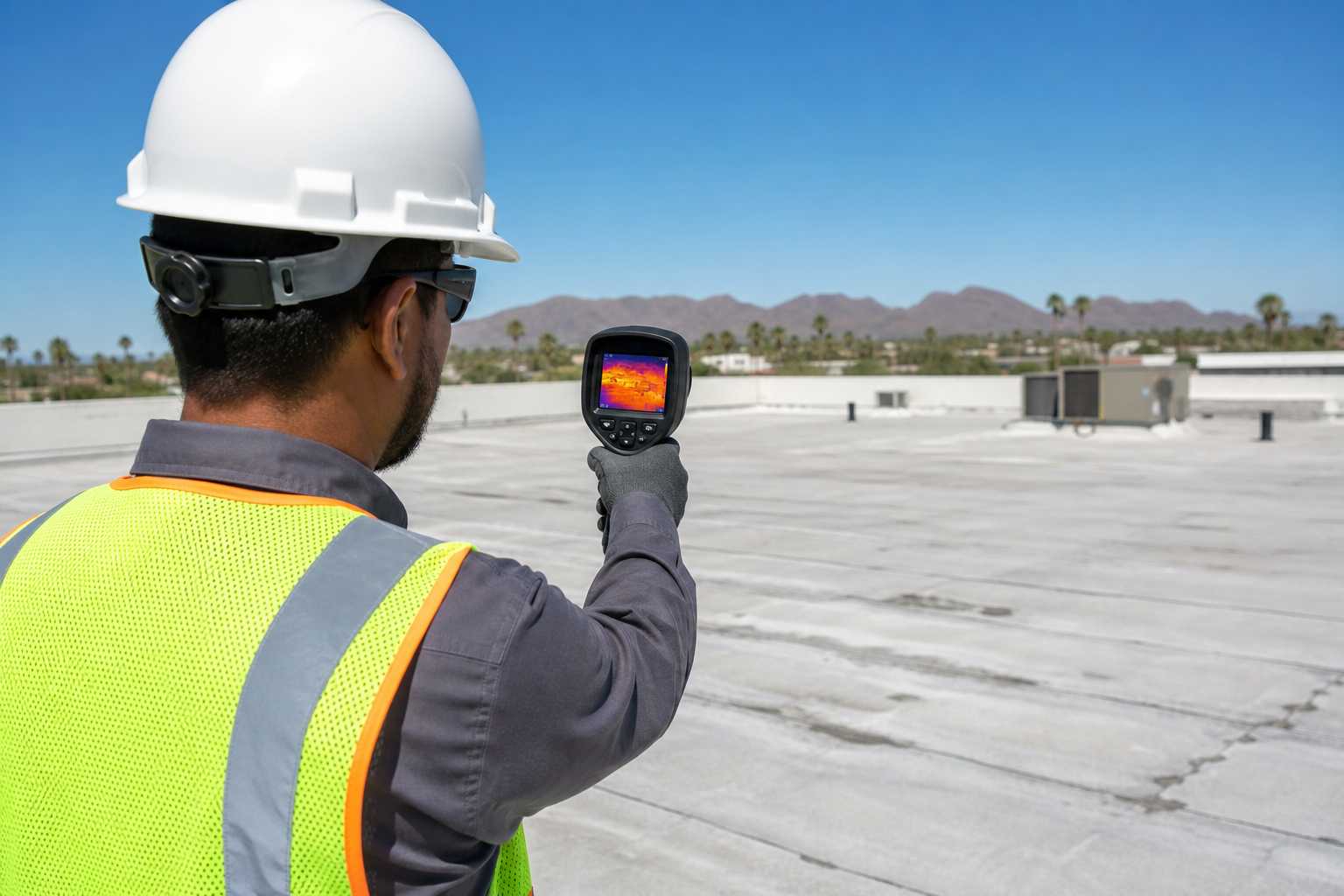
Commercial Roof Inspection in Mesa, AZ — Preventive Maintenance Programs
Twice-yearly inspections, documented reports, small repairs caught before they become big ones. Our maintenance programs keep warranties intact and roofs performing.
Mesa Commercial Roofing Co. The single most effective thing a commercial property owner can do to extend roof life and avoid surprise capital expenditures is establish a documented inspection and maintenance program. Not an annual walkthrough by a maintenance tech with a flashlight — a systematic, documented inspection by a qualified commercial roofing technician who knows what failure looks like before it becomes a leak.
We've been hired to replace commercial roofs that were 8 years old because they never had a single maintenance visit after installation. We've also maintained roofs for clients that are 28 years old and still performing within spec. The difference isn't the membrane — it's the maintenance history.
What a Professional Roof Inspection Covers
A thorough commercial roof inspection covers every element of the roofing system, not just the membrane surface:
Membrane condition. Surface inspection for UV degradation, punctures, blisters, open seams, and granule loss. We probe suspicious areas and note any zones of reduced membrane thickness or flexibility.
All penetrations. Every HVAC curb, pipe boot, conduit, exhaust fan, and skylight gets inspected. Penetration flashings are the highest-failure-probability locations on any commercial roof.
Perimeter edge and parapet flashing. Metal coping, counterflashing, and edge metal expand and contract independently of the membrane. We inspect sealant condition, mechanical fastening, and any separation between flashing components.
Drainage systems. Every drain, scupper, and leader is inspected for blockage, damage, and proper function. Improperly draining roofs accelerate deterioration faster than almost any other factor.
Substrate condition assessment. Where possible (around open drains, at split seams, at roof penetrations), we assess the condition of insulation below the membrane. Wet insulation is invisible from the surface and destroys decks silently over years.
Rooftop equipment condition. We're not HVAC technicians, but we observe and document the condition of rooftop equipment, including evidence of grease buildup, condensate drainage issues, and equipment that appears to be leaking or poorly maintained.
Infrared Moisture Scanning
For comprehensive annual inspections, we offer infrared thermography scanning of the roof membrane. Thermal imaging detects areas of wet insulation that can't be seen during visual inspection — the wet areas retain heat longer than dry insulation and show as warm spots during the evening cool-down period.
Infrared scans provide a baseline for wet insulation mapping, allow us to track whether existing wet areas are expanding or stable, and help prioritize repair investment. We provide a scaled roof drawing with all wet areas marked and a written interpretation of what the scan indicates.
Maintenance Tasks Performed at Inspection
Inspection and minor maintenance happen simultaneously on our service visits:
- Clearing roof drains and scuppers of debris
- Applying lap sealant to any lifting or open seam edges
- Patching minor punctures
- Re-torquing any loose pitch pans or penetration covers
- Documenting and photographing any areas that require scheduled repair
Our Maintenance Program Options
Basic Annual Program. One documented inspection per year, minor maintenance tasks included, written report delivered within 3 business days. Suitable for roofs under 10 years old with no known active issues.
Semi-Annual Program (Recommended). Pre-monsoon inspection (April/May) and post-monsoon inspection (October/November). Arizona's monsoon season is the most common driver of commercial roof problems — catching what the summer storms exposed before winter is critical. Most cost-effective program for the Arizona climate.
Quarterly Program. For high-value buildings, buildings with challenging drainage, restaurant roofs, or any building where active HVAC maintenance or tenant activity creates ongoing rooftop traffic. Includes all basic tasks plus more frequent drain clearing and equipment zone inspection.
The ROI of Roof Maintenance
A commercial roof maintenance program typically costs $0.05–$0.15 per square foot per year. A full commercial roof replacement runs $6–$14 per square foot. Regular maintenance that catches problems early and extends roof life by 5–10 years is among the highest-return property maintenance investments available.
Beyond the direct cost savings, a documented maintenance history:
- Satisfies warranty requirements (most manufacturer warranties require documented maintenance)
- Supports insurance claims when storm or wind damage occurs
- Provides capital planning data for ownership and asset management teams
- Reduces liability exposure from active leak damage to tenant property or inventory
Maintenance Records and Reporting
Every service visit generates a written report with photos, scope of maintenance performed, deficiencies observed, recommended repairs, and a condition rating for each roof section. Reports are delivered digitally and can be shared with property management platforms.
We maintain your complete maintenance history and provide a consolidated condition history when you need it — for refinancing inspections, property sales due diligence, or capital budget planning.
Common Questions
How often should a commercial roof be inspected in Arizona?
Does my roof warranty require inspections?
What's the difference between a roof inspection and an infrared scan?
Can I use roof inspection reports for insurance purposes?
Related Solutions
TPO Roofing
Thermoplastic polyolefin roofing systems built for Arizona's brutal sun. We install, repair, and maintain TPO membranes across Mesa's commercial sector.
Roof Coating & Restoration
Silicone and acrylic roof coatings restore aging membranes, stop leaks, and slash cooling costs. Often half the price of a full replacement.
Commercial Roof Repair
Leaks, membrane splits, flashing failures, ponding water — we diagnose and fix commercial roofing problems the same week you call.
Serving Mesa, Phoenix, Scottsdale, Chandler, Gilbert, Tempe, Glendale, Peoria, Queen Creek, and Apache Junction. Mesa Commercial Roofing Co. handles commercial roofing across the entire East Valley.