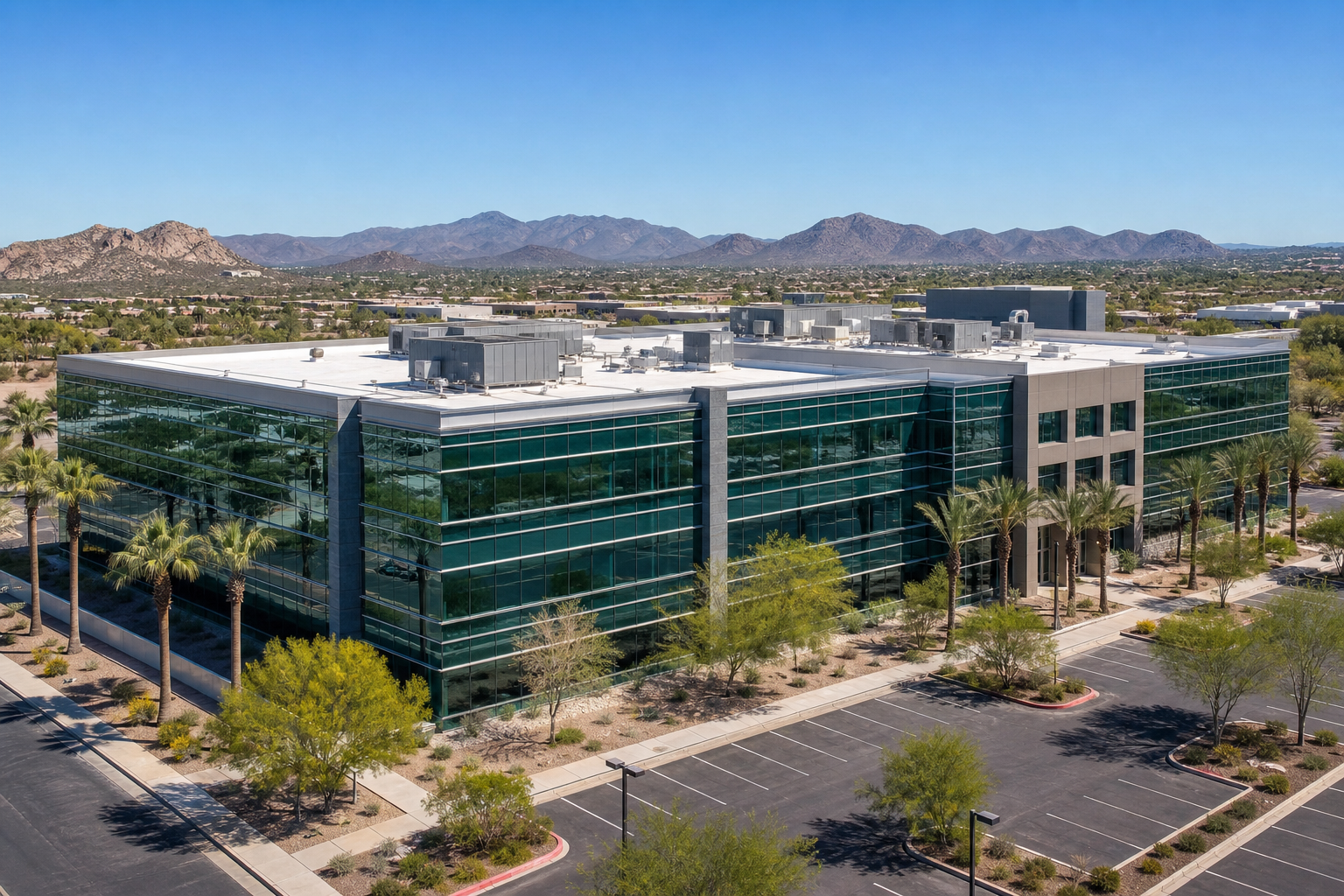
Commercial Office Building Roofing in Mesa, AZ — Zero Disruption to Tenants
Office tenants can't tolerate leaks, noise, or downtime. We phase commercial roofing projects around your occupancy schedule and building management requirements.
Mesa Commercial Roofing Co. Office building roofing demands a different kind of discipline than industrial or restaurant work. Tenants who lease Class A and Class B office space expect zero disruption to their operations — no noise vibrations rattling conference calls, no odors filtering through the HVAC system, no surprise leaks during client visits. Your roof contractor's ability to communicate, phase properly, and minimize building impact is as important as their technical ability.
We've worked with property management companies across the East Valley's office market — from multi-tenant Class A high-rises in Scottsdale to suburban medical office parks in Gilbert. The common thread is that occupied buildings require a contractor with process discipline, not just technical skill.
Roofing Systems Common to Office Buildings
TPO on multi-story low-slope roofs. The most common new-construction and re-roofing system on Class A and Class B office buildings. White membrane provides energy performance that matters for office buildings where HVAC costs are a significant operating expense. We install 60-mil and 80-mil TPO systems with tapered insulation for positive drainage.
EPDM on older office buildings. A significant portion of Mesa's office inventory was built with EPDM systems in the 1980s–2000s. Many of these roofs are approaching or past their design life. We assess existing EPDM for coating restoration potential or full TPO replacement depending on the substrate condition.
Metal panel roofing on medical office. Medical office buildings often use metal roofing on pitched sections with TPO or EPDM on flat mechanical areas. Coordinating the transition between steep-slope and low-slope systems requires experienced detailing.
Green roof and plaza deck systems. Some newer Class A office developments include vegetated plaza deck or extensive green roof sections. These require specialized waterproofing membranes, root barriers, and drainage composites. We have experience with inverted roof membrane assemblies (IRMA) and protected membrane assemblies used on occupied plaza deck applications.
Coordinating with Property Management
Every office re-roofing project starts with a pre-construction meeting that includes:
- Reviewing the tenant roster and identifying noise-sensitive or odor-sensitive tenants (call centers, medical practices, food service)
- Establishing communication protocols — who gets notified, how far in advance, what information gets shared
- Identifying rooftop equipment ownership (some tenant equipment lives on the roof — the property manager needs to loop those tenants in)
- Phasing the work around move-in/move-out dates, major tenant events, and building HVAC maintenance windows
We don't hand you a start date and show up. We build a project execution plan with the property management team before we swing the first hammer.
Minimizing Disruption During Roofing Operations
The biggest noise sources in commercial roofing are power fasteners during insulation installation and the compressor on hot-air welding equipment. We schedule these phases for low-occupancy times where possible and use acoustic barriers at penetrations when the work is directly above a sensitive area.
Odors from modified bitumen or roof cement work can travel through HVAC intakes — we coordinate with the building's HVAC team to disable outdoor air intake on the affected unit during work phases within range of the intake.
Debris management is a constant discipline. We don't let roofing material accumulate around entrances, don't leave equipment in fire lanes, and don't park on landscaping. It sounds basic but it's not universal.
Energy Performance for Office Owners
Commercial office buildings in Arizona spend a disproportionate portion of their operating budget on cooling. Roofing decisions directly affect that number:
- A white TPO or EPDM roof vs. a black modified bitumen system can reduce rooftop solar heat gain by 70–80%
- Increased insulation R-value from polyiso upgrades reduces heat transfer to conditioned space
- Proper sealing of penetrations reduces air infiltration through the roof assembly
We provide pre-project energy performance modeling for ownership groups who want to quantify the ROI of upgrading insulation thickness or switching to a reflective membrane during re-roofing.
Long-Term Property Management Support
We offer maintenance programs tailored to office property management needs: twice-yearly inspections timed around lease renewals (a documented roof inspection is useful when negotiating with new tenants), written condition reports formatted for capital planning, and 24-hour emergency response for active leaks.
Common Questions
How do we handle roofing on a multi-tenant building without disrupting tenants?
What should I know before a lease renewal about the condition of the roof?
Can roofing work void our building's HVAC warranties?
What is a tapered insulation system and why does it matter for office buildings?
Related Solutions
TPO Roofing
Thermoplastic polyolefin roofing systems built for Arizona's brutal sun. We install, repair, and maintain TPO membranes across Mesa's commercial sector.
EPDM Roofing
Durable synthetic rubber membranes that handle thermal cycling and UV exposure. Ideal for office buildings, schools, and multi-tenant commercial properties.
Roof Inspection & Maintenance
Twice-yearly inspections, documented reports, small repairs caught before they become big ones. Our maintenance programs keep warranties intact and roofs performing.
Serving Mesa, Phoenix, Scottsdale, Chandler, Gilbert, Tempe, Glendale, Peoria, Queen Creek, and Apache Junction. Mesa Commercial Roofing Co. handles commercial roofing across the entire East Valley.