TPO Roofing in Mesa, AZ — Commercial Flat Roof Installation & Repair
Thermoplastic polyolefin roofing systems built for Arizona's brutal sun. We install, repair, and maintain TPO membranes across Mesa's commercial sector.
Mesa Commercial Roofing Co. TPO — thermoplastic polyolefin — is the dominant commercial roofing membrane in Arizona for good reason. It reflects solar radiation instead of absorbing it, handles the brutal freeze-thaw swings of high-altitude desert nights, and welds at the seams rather than gluing, which means no adhesive failures from the 120°F roof surface temperatures we see in Mesa every July.
When it's installed correctly, a 60-mil or 80-mil TPO membrane will outlast most of the building systems beneath it. When it's installed wrong — wrong weld temperatures, inadequate fastener spacing, membrane laid over wet insulation — it fails in two to five years and leaves you chasing leaks forever.
What Goes Into a Commercial TPO Installation
The membrane is the visible part. The system that supports it determines whether it lasts 15 years or 30.
Insulation selection and layering. In Phoenix's extreme climate, polyisocyanurate (polyiso) insulation provides the highest R-value per inch, but it compresses under foot traffic if not properly specified and protected. We typically use a two-layer polyiso system with a cover board — often high-density wood fiber or a rigid gypsum board — to give the membrane a stable, durable surface to weld against. Skipping the cover board saves money on Day 1 and costs far more in premature membrane damage over 5 years.
Deck attachment and uplift resistance. Flat commercial roofs are vulnerable to wind uplift — especially at corners and perimeter edges. We follow ASCE 7 and local AHJ requirements for fastener density and edge termination. In Mesa and Maricopa County, we're designing for 110–130 mph design wind speeds depending on building location. Under-fastened roofs peel back in monsoon events.
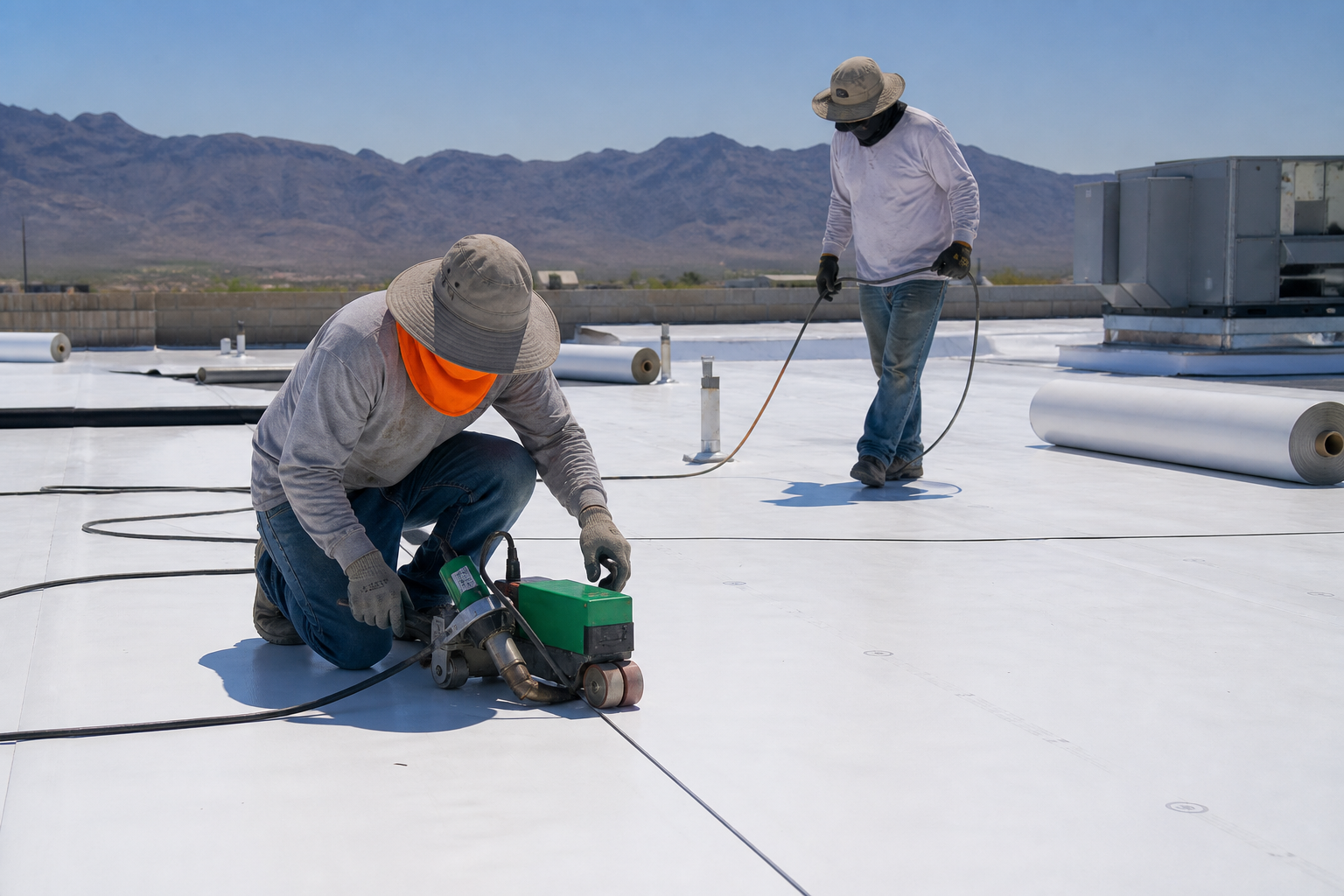
Heat-welded seams, verified. Every seam gets heat-welded with calibrated hot-air welding equipment, then tested with a probe for integrity. We don't tape seams or use lap sealant as a primary bond on commercial work — those are temporary measures. Properly welded TPO seams are actually stronger than the membrane itself.
Flashing at every penetration. Every HVAC curb, pipe boot, scupper, and parapet wall cap is a potential failure point. We use prefabricated TPO flashing pieces where possible and field-fabricate where required, with all flashing welded to the field membrane rather than caulked.
TPO Membrane Thickness: 45-mil, 60-mil, or 80-mil?
A 45-mil membrane is technically compliant and will work for light-use roofs with minimal foot traffic. For most commercial applications in Arizona, we specify 60-mil as the standard. In high-traffic areas, around mechanical equipment, or on roofs with heavy HVAC loads, 80-mil is the correct choice.
Thicker membranes resist punctures, handle UV degradation better over their lifespan, and show less thermal fatigue from the extreme temperature swings we get here. The cost difference between 60-mil and 80-mil is modest compared to the cost of an emergency repair in Year 7.
TPO vs. PVC: Which Is Right for Your Building?
PVC (polyvinyl chloride) is TPO's primary competitor in the single-ply category. PVC has better inherent chemical resistance — important for restaurant roofs with grease exhaust — and historically handled heat-welding more consistently than early TPO formulations. Modern TPO has closed most of that performance gap while remaining less expensive.
For most Mesa-area commercial buildings, TPO is the right call. For buildings with significant grease exposure, chemical exposure, or very high foot traffic, PVC deserves serious consideration.
Energy Performance
A white TPO membrane reflects 70–85% of solar radiation (compared to 5–15% for dark built-up roofing). For a 50,000 sq ft building in Mesa, that difference can translate to 15–25% reductions in summer cooling load on rooftop HVAC. In Arizona's climate, that adds up fast over a roof's lifespan.
TPO roofs also meet ENERGY STAR requirements and can contribute to LEED credit accumulation for buildings pursuing certification.
Maintenance and Lifecycle
A properly installed TPO system on a well-drained deck should last 20–30 years with minimal intervention. Annual maintenance — clearing drains, inspecting seams at penetrations, catching small punctures early — extends that lifespan and keeps the manufacturer warranty intact.
We offer annual maintenance programs that include a full documented inspection, minor repairs, drain clearing, and a written report you can share with your property management company or ownership group.
Common Questions
How long does a TPO roof last in Arizona's climate?
Can TPO be installed over an existing roof?
What causes TPO seam failures?
Is TPO good for a restaurant building?
How much does a commercial TPO roof cost per square foot?
Related Solutions
EPDM Roofing
Durable synthetic rubber membranes that handle thermal cycling and UV exposure. Ideal for office buildings, schools, and multi-tenant commercial properties.
Roof Coating & Restoration
Silicone and acrylic roof coatings restore aging membranes, stop leaks, and slash cooling costs. Often half the price of a full replacement.
Commercial Roof Repair
Leaks, membrane splits, flashing failures, ponding water — we diagnose and fix commercial roofing problems the same week you call.
Serving Mesa, Phoenix, Scottsdale, Chandler, Gilbert, Tempe, Glendale, Peoria, Queen Creek, and Apache Junction. Mesa Commercial Roofing Co. handles commercial roofing across the entire East Valley.