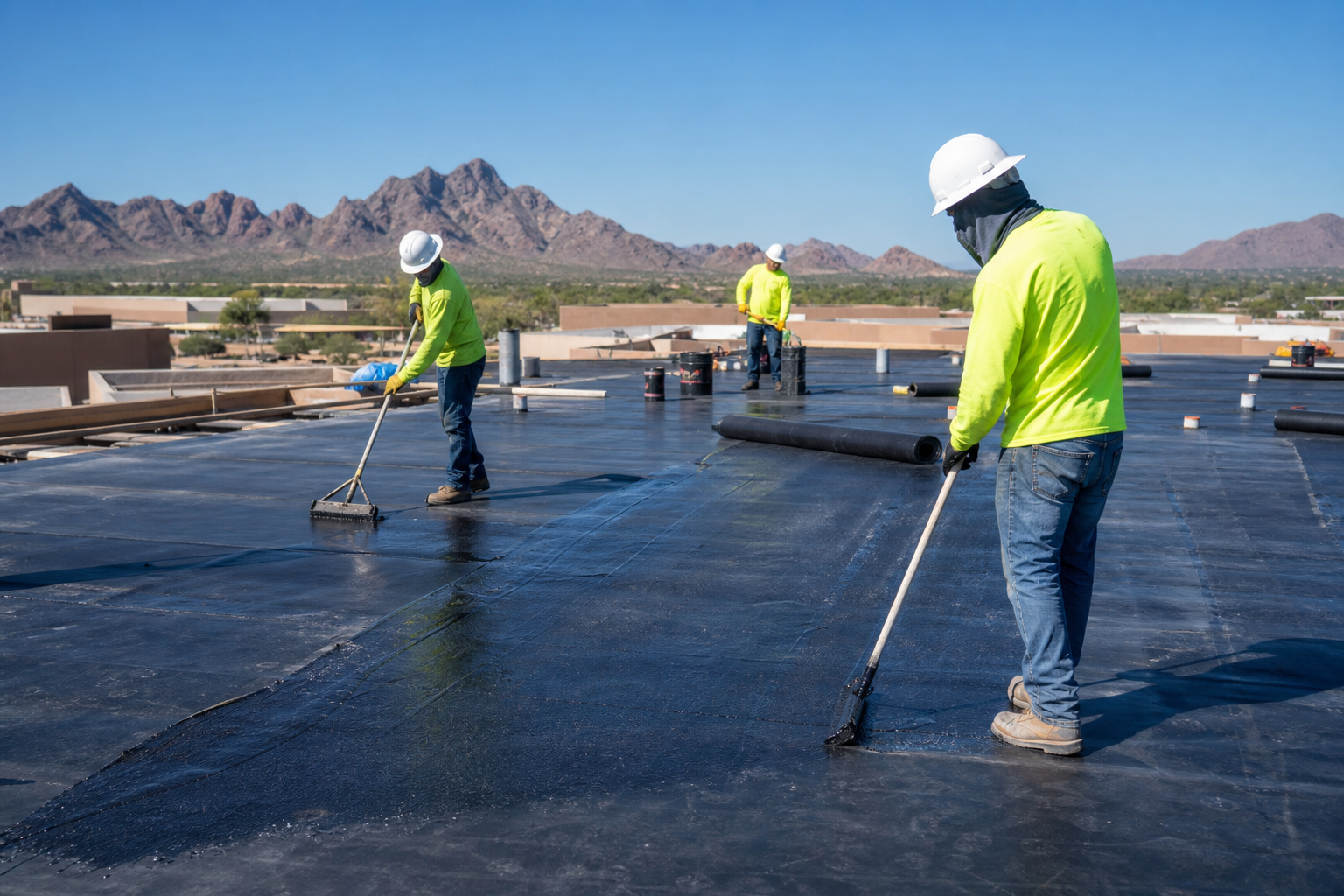
EPDM Roofing in Mesa, AZ — Commercial Rubber Membrane Specialists
Durable synthetic rubber membranes that handle thermal cycling and UV exposure. Ideal for office buildings, schools, and multi-tenant commercial properties.
Mesa Commercial Roofing Co. EPDM — ethylene propylene diene monomer — is synthetic rubber, and it's been the go-to flat roofing membrane for commercial buildings for over 50 years. Hospitals, schools, government buildings, and multi-tenant office parks across Arizona were built with EPDM roofs. Many are still functioning well past their 30th year.
The reason EPDM endures is simple chemistry. Rubber handles the thermal stress of desert climates better than many alternatives. It flexes without cracking through extreme temperature cycles, maintains flexibility in cold temperatures, and resists UV degradation exceptionally well in a properly installed system.
EPDM System Types: Ballasted, Mechanically Attached, and Fully Adhered
How the EPDM membrane is held to the roof deck matters as much as the membrane itself. There are three primary methods:
Ballasted EPDM. Loose-laid membrane weighted down by river stone or concrete pavers. The simplest installation method, least expensive, and easiest to patch. The trade-off: ballast adds significant dead load (10–12 lbs/sq ft for stone ballast), which not every deck can support. Ballasted systems also lose ballast in high-wind events, and the stone hides the membrane, making inspection difficult. We use ballasted EPDM only when the deck and wind zone make it appropriate.
Mechanically attached EPDM. Membrane fastened through the insulation to the deck at defined spacing, with seam laps over the fastener rows. Lighter than ballasted, faster to install, and handles wind uplift predictably. The fasteners create thermal bridging points, which affects R-value somewhat. This is the most common commercial EPDM installation method in Arizona.
Fully adhered EPDM. Membrane glued to the substrate across its entire field. No exposed fasteners, no ballast. Provides the cleanest, most dimensionally stable installation and the lowest profile for aesthetically sensitive applications. More labor-intensive and more sensitive to substrate preparation — fully adhered EPDM applied over improperly prepared or damp insulation will tent and delaminate. When it's done right, it's the best-performing system.
EPDM Seams: The Critical Detail
Unlike TPO, EPDM seams cannot be heat-welded. They're bonded with splice adhesive and sealed with seam tape. This works extremely well when the process is done correctly — clean membrane surfaces, proper temperature (adhesive application in Arizona summer heat requires careful technique), and appropriate roller pressure. Shortcuts at the seam create the majority of EPDM failures we're called in to diagnose.
In modern EPDM work, we use factory-fabricated corners and T-joints wherever possible. The factory-controlled environment produces more consistent bonds than field-fabricated connections.
EPDM vs. TPO: Choosing the Right System
Both are excellent commercial flat roofing systems. Here's how we help clients decide:
| Consideration | EPDM | TPO |
| Color | Black standard (white available, at premium) | White standard |
| Energy performance | Black absorbs heat — worse for cooling loads | White reflects heat — better for cooling |
| Chemical resistance | Excellent general resistance | Slightly better for some chemicals |
| Seaming method | Adhesive/tape | Heat welded |
| Flexibility at low temps | Excellent | Good |
| Market tenure | 50+ years of data | 30+ years of data |
For Arizona buildings where cooling load is the dominant concern, white TPO generally wins on energy performance. For buildings where durability, long track record, and established repair methods matter most — EPDM is a legitimate first choice, especially for large flat roofs that benefit from EPDM's wide sheet widths reducing seam count.
Repairing Existing EPDM Roofs
EPDM is one of the most repairable commercial roofing systems on the market. Seam repairs use EPDM lap sealant and seam tape. Punctures and tears patch with bonded EPDM patches. Even failed flashing can be stripped and re-flashed without disturbing the field membrane.
If your building has an existing EPDM roof that's 15–25 years old, a roof assessment can determine whether you're looking at targeted repairs, a coating application to extend life, or a full replacement. We don't push replacement when repair or restoration makes economic sense.
EPDM for Specific Applications
Schools and universities. Large flat footprints, tight budgets, and long ownership cycles make EPDM a natural fit. We've re-roofed school districts with EPDM systems designed for 30-year service life.
Medical office buildings. HVAC load from medical equipment creates rooftop penetration complexity. EPDM handles heavy penetration density well and is easy to modify when HVAC systems are replaced.
Multi-tenant office and retail. Large, accessible flat roofs with high foot traffic from maintenance crews make EPDM's puncture repair simplicity valuable over the long run.
Common Questions
How long does EPDM roofing last?
Can EPDM be coated to improve energy performance?
What causes EPDM to shrink and pull away from walls?
Is white EPDM worth the additional cost in Arizona?
Related Solutions
TPO Roofing
Thermoplastic polyolefin roofing systems built for Arizona's brutal sun. We install, repair, and maintain TPO membranes across Mesa's commercial sector.
Roof Coating & Restoration
Silicone and acrylic roof coatings restore aging membranes, stop leaks, and slash cooling costs. Often half the price of a full replacement.
Commercial Roof Repair
Leaks, membrane splits, flashing failures, ponding water — we diagnose and fix commercial roofing problems the same week you call.
Serving Mesa, Phoenix, Scottsdale, Chandler, Gilbert, Tempe, Glendale, Peoria, Queen Creek, and Apache Junction. Mesa Commercial Roofing Co. handles commercial roofing across the entire East Valley.